
Hello, vintage enthusiasts! If you’re diving into the world of collectible glassware, you’ve likely encountered Depression glass, carnival glass, and milk glass. Each type has its unique charm, history, and characteristics. Let’s explore the differences and highlight a few treasures available in our shop.
Depression Glass: A Glimmer of Hope in Tough Times
History: Depression glass was produced during the Great Depression (1929-1939) as an affordable way to brighten up households. Often given away as promotional items in cereal boxes or movie theaters, these pieces are now cherished collectibles.
Identification Tips: Depression glass is known for its variety of patterns and colors, including pink, green, and cobalt blue. Look for intricate patterns and slight imperfections due to the mass production techniques of the era.
Notable Companies: Hazel Atlas, Anchor Hocking, and Federal Glass.
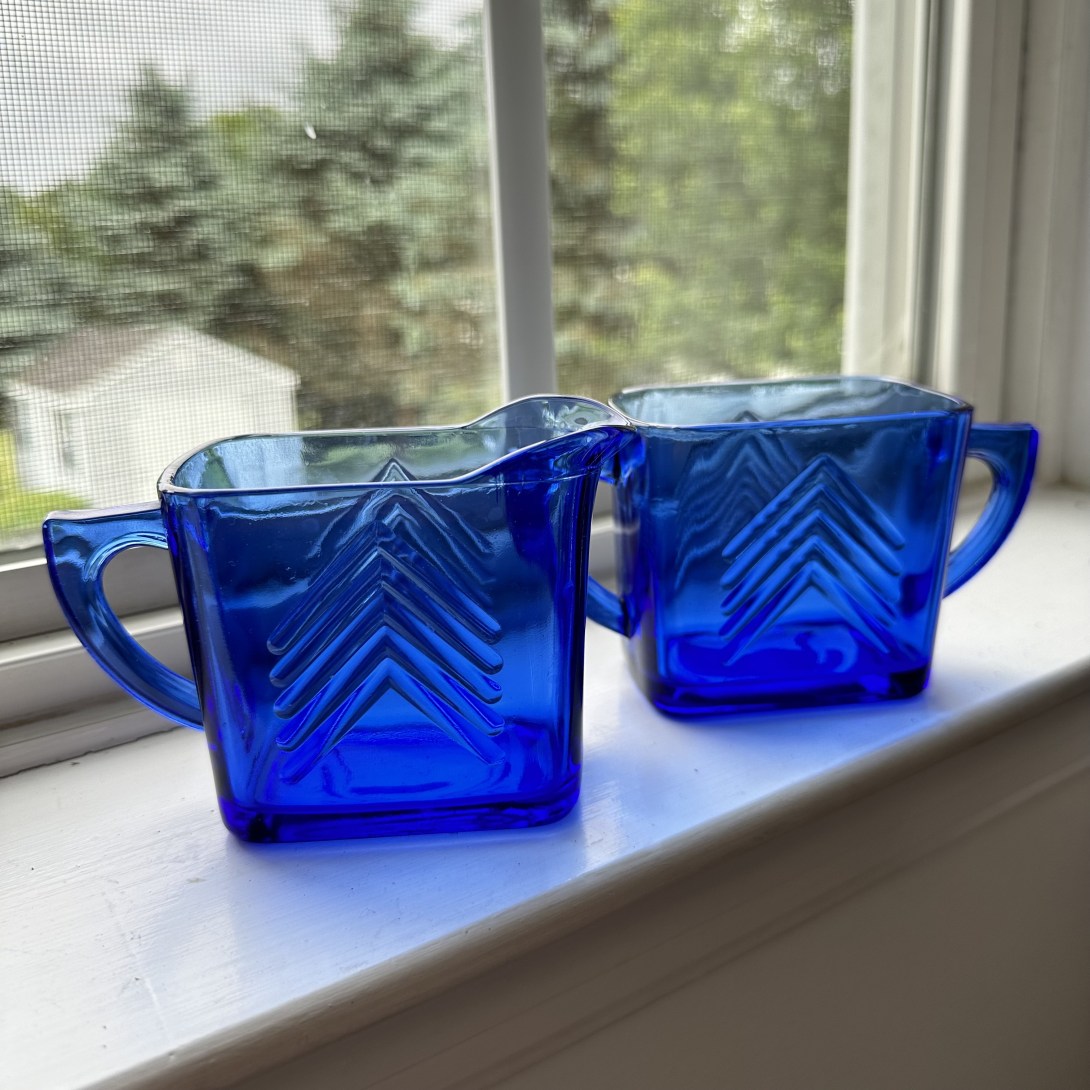
Shop Highlight: Our Hazel Atlas cobalt blue creamer and sugar pot set is a stunning example of Depression glass. Its deep blue hue and elegant design are perfect for adding a touch of vintage charm to your collection.
Carnival Glass: The Shimmering Jewel
History: Carnival glass was first produced in the early 1900s by companies like Fenton and Northwood. Its production continued into the mid-20th century. Originally created as an affordable alternative to more expensive glass, its iridescent finish quickly became popular.
Identification Tips: Carnival glass is easy to spot with its distinctive, shimmering finish that changes colors in the light. It often features elaborate patterns, and while many pieces have markings, some do not. Look for a shiny, oil-slick appearance and rich colors like marigold, amethyst, and green.
Notable Companies: Fenton, Northwood, and Indiana Glass.
Shop Highlight: Check out our Indiana Glass carnival glass compote. Its radiant finish and intricate design make it a standout piece for any collector.
Milk Glass: The Elegant Opaque
History: Milk glass has been around since the 16th century but gained popularity in the U.S. during the Victorian era and saw a resurgence in the mid-20th century. Its creamy, opaque finish makes it a favorite for elegant decor.
Identification Tips: True milk glass is white and opaque, often with a glossy finish. It can be smooth or feature raised patterns. Some pieces have a slight translucence when held up to the light. Check for fire-polished edges and a slightly heavy feel compared to other glass types.
Notable Companies: Westmoreland, Fenton, and Anchor Hocking.
Shop Highlight: Have a look at our Hazel Atlas Milkglass pitcher for a great example of the opaque and glossy finish of milk glass. Pair this beauty with a bunch of fresh cut summer flowers for a beautiful seasonal table centerpiece.
Identification Hints
When labels or markings are missing, identifying glassware can be tricky. Here are some tips:
- Color and Finish: Examine the color, finish, and texture. Depression glass often has soft pastel colors, carnival glass is iridescent, and milk glass is opaque white.
- Patterns: Familiarize yourself with common patterns and designs specific to each type.
- Weight and Feel: Vintage glass often feels slightly heavier and has a different texture compared to modern reproductions.
- Research: Use reference books or online databases dedicated to vintage glassware to compare patterns and styles.
Embrace the beauty and history of collectible glassware with these unique pieces. Happy hunting!
 THE VINTAGERY